China Best Over Head Shower Manufacturers for Global Buyers?
Choosing a reliable China manufacturer for an Over Head Shower requires more than comparing factory prices. Global buyers need stable quality, clear communication, and evidence of responsible production. A polished catalog can look impressive. It may not show spray consistency, coating durability, or internal testing. This guide introduces practical ways to assess suppliers before ordering samples or larger quantities. It focuses on details that affect bathrooms, distributors, and long-term customer trust.
Experienced sourcing teams usually review material specifications, water-flow performance, surface finishes, corrosion resistance, and packaging protection. They also request product drawings, inspection records, and sample feedback. Stainless steel, brass, ABS, and other materials suit different budgets and applications. A professional manufacturer should explain these choices clearly. Buyers should check relevant certifications for their target markets, rather than trusting vague claims. Factory audits, video inspections, and independent quality checks can reveal gaps between promises and production.
The strongest suppliers often provide customization, stable lead times, replacement support, and realistic communication. Yet no factory is perfect. A sample may pass inspection while a later batch shows inconsistent plating or blocked nozzles. That risk deserves attention. Ask how corrective actions are recorded and verified. This article compares China’s Over Head Shower manufacturing capabilities through practical, buyer-focused criteria. It aims to support informed decisions, not promote one supplier blindly. Careful verification still matters.
What Makes a Chinese Overhead Shower Manufacturer Stand Out
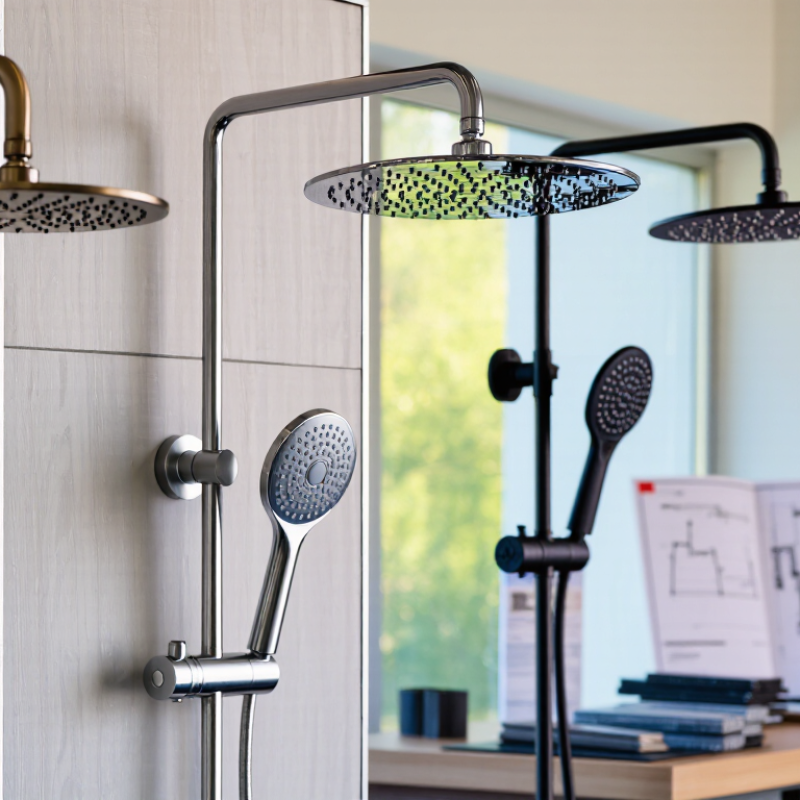
For global buyers, a Chinese overhead shower manufacturer stands out through disciplined engineering, not attractive catalogs alone. Experienced factories study water pressure, spray coverage, drainage, and daily cleaning habits before finalizing a design. During supplier visits, buyers should inspect CNC machining, polishing lines, assembly benches, and leak-testing records. A reliable maker can explain tolerances, material grades, and production capacity without vague promises. Stainless steel, solid brass, and certified cartridges may improve durability, but each claim needs documents and samples. One showroom sample is not enough. Real performance appears after repeated testing.
Tips: Request a pre-production sample and a signed specification sheet. Check spray holes for even flow at different pressures. Ask for salt-spray, cycle, and pressure-test reports from an identifiable laboratory. Confirm packaging with corner protection and moisture control. Keep one approved sample for future comparison. Small details matter.
Professional manufacturers also communicate clearly after the purchase order. They provide drawings, inspection checkpoints, spare-part guidance, and realistic lead times. Their quality team tracks defects by batch, rather than hiding uncomfortable numbers. This transparency builds authority over time. Still, no supplier is perfect. A polished website can conceal weak after-sales systems, while a minor finish issue may reveal an honest correction process. Buyers should compare factory evidence, not only price or verbal confidence. The strongest partner improves designs through field feedback, water testing, and careful review of every complaint.
China Best Overhead Shower Manufacturers for Global Buyers? What Makes a Chinese Overhead Shower Manufacturer Stand Out
Export-ready overhead shower manufacturers stand out by offering designs that can be adapted to different water-efficiency requirements. The chart compares maximum flow-rate benchmarks from selected international programs and regulations.
Why it matters: A capable manufacturer should support low-flow engineering, stable spray performance, accurate testing, and documentation for multiple target markets. The benchmarks shown are public limits and are not linked to any specific company or brand.
Sources: U.S. EPA WaterSense, California Title 20 Appliance Standards, Australian Water Rating.
Key Criteria for Evaluating Chinese Shower Manufacturers
China Best Over Head Shower Manufacturers for Global Buyers?
A reliable Chinese shower manufacturer should prove more than a polished catalog. Request factory-audit records, production videos, and recent inspection reports. ISO 9001 certification indicates a quality system, not perfect products. Check whether the factory controls incoming brass, plastic, seals, plating, and final assembly. The U.S. EPA WaterSense program limits labeled showerheads to 2.0 gallons per minute, or 7.6 liters, at standard pressure. Ask for flow-rate test results at several pressures, not one attractive number. Real bathrooms vary.
Material verification matters. Ask for lead-content reports, leak-test records, and corrosion testing based on recognized methods such as ASTM B117. Confirm the test duration and sample quantity. “Passed” is incomplete evidence. The World Health Organization’s 2022 drinking-water report noted that 2.2 billion people lacked safely managed drinking water, reminding buyers that water-contact materials deserve serious scrutiny. This figure does not directly measure shower safety, but it gives useful context.
Experienced buyers should also inspect packaging, spare-part availability, mold ownership, and complaint response times. A capable supplier can explain spray-hole cleaning, cartridge compatibility, and installation tolerances without vague promises. Request samples from normal production, not specially prepared units. Sample quality can mislead. I would compare three production batches and record water pressure, spray coverage, finish changes, and carton damage. The Global Bathroom Market Report by Grand View Research shows continued market expansion, but growth can encourage rushed sourcing. Cost is important. Traceability is harder to replace.
Quality Standards, Certifications, and Production Capabilities
Quality standards separate dependable overhead shower manufacturers from polished catalog sellers. The ISO Survey 2022 recorded 1,265,216 ISO 9001 certificates across 189 countries and economies. This figure shows quality management is widespread, but certification alone proves little about shower performance. Buyers should request valid certificates, audit scope, issuing bodies, and renewal dates. ISO 14001 can support environmental controls, while ISO 45001 indicates structured worker-safety practices. These systems matter when factories handle plating chemicals, metal dust, and high-volume assembly.
Production evidence should be more concrete. Ask for brass or stainless-steel material reports, incoming inspection records, and batch traceability. A capable factory should test pressure resistance, leakage, spray uniformity, flow rate, and surface corrosion. Salt-spray results need test duration and failure criteria, not only attractive photographs. The U.S. EPA WaterSense showerhead specification limits flow to 2.0 gallons per minute, compared with the federal 2.5-gallon limit. Global buyers should request equivalent market tests, especially for water-saving models. For water-contact materials, relevant approvals may include NSF/ANSI/CAN 61, WRAS, or ACS, depending on the destination market. The process is not flawless. Even a factory with strong documentation can miss assembly variation, so independent pre-shipment inspection remains sensible. Capacity claims also need checking through machine lists, shift records, tooling samples, and recent production videos.
How Global Buyers Can Select and Purchase the Right Supplier
China Best Over Head Shower Manufacturers for Global Buyers?
Global buyers should select suppliers by evidence, not polished catalogues. The ISO Survey 2023 recorded more than 1.26 million ISO 9001 certificates worldwide. Certification helps, but it does not replace factory verification. Request recent audit records, production photos, material declarations, and batch-level inspection reports. Check brass or stainless-steel grades, ceramic cartridge quality, coating thickness, and spray-plate durability. A beautiful sample can still hide weak internal parts. That mistake is expensive.
Product fit also depends on the destination market. Confirm water-pressure ranges, connection sizes, flow rates, packaging tests, and installation instructions. Ask for independent testing when local requirements demand it. UNCTAD’s Review of Maritime Transport 2024 states that over 80% of global merchandise trade moves by sea. Therefore, compare carton strength, pallet design, lead times, and shipping terms before signing. A low factory price may become costly after damage, delays, or replacement parts. I would request a pilot order first. It reveals problems earlier.
Tips: Build a supplier scorecard. Give separate scores for quality, compliance, communication, capacity, and delivery. Ask three precise questions: Who checks the final batch? What happens after a defect? Can spare parts remain available for five years? Visit the facility, or hire an independent inspector. Do not rely only on certificates. Their date, scope, and issuing body deserve review. Procurement teams sometimes overlook after-sales support. That is a practical weakness worth correcting.