



Top 10 Best Head Showers for Global Buyers?
Choosing the right showerhead is no longer only about appearance. Water use, spray comfort, installation, and durability now influence global purchasing decisions. This guide, “Top 10 Best Head Showers for Global Buyers,” examines products through practical bathroom experience and measurable performance.
EPA WaterSense standards provide a useful benchmark. Certified showerheads must use no more than 2.0 gallons per minute and deliver at least 20% greater water efficiency than standard models. That difference matters in a busy hotel, a family bathroom, or a water-stressed home. UN-Water’s World Water Development Report 2024 also emphasizes growing pressure on freshwater resources. Efficient design deserves serious attention.
Not every premium-looking model performs well. Some wide rain plates create impressive coverage but feel weak under low pressure. Others leave visible water spots after a few uses. Small details matter, including silicone nozzles, adjustable angles, thread compatibility, and corrosion-resistant finishes. We compare these features for different climates, plumbing systems, and user expectations.
The ranking considers spray quality, flow control, material reliability, cleaning effort, installation simplicity, and long-term value. It also acknowledges regional differences. A model suited to a high-pressure European apartment may disappoint in a low-pressure rural property. There is no perfect choice.
A careful buyer should still verify local water standards and connection sizes. Product claims can sound stronger than real bathroom performance. Our Top Head Shower selection aims to make that evaluation clearer, more honest, and easier to apply.
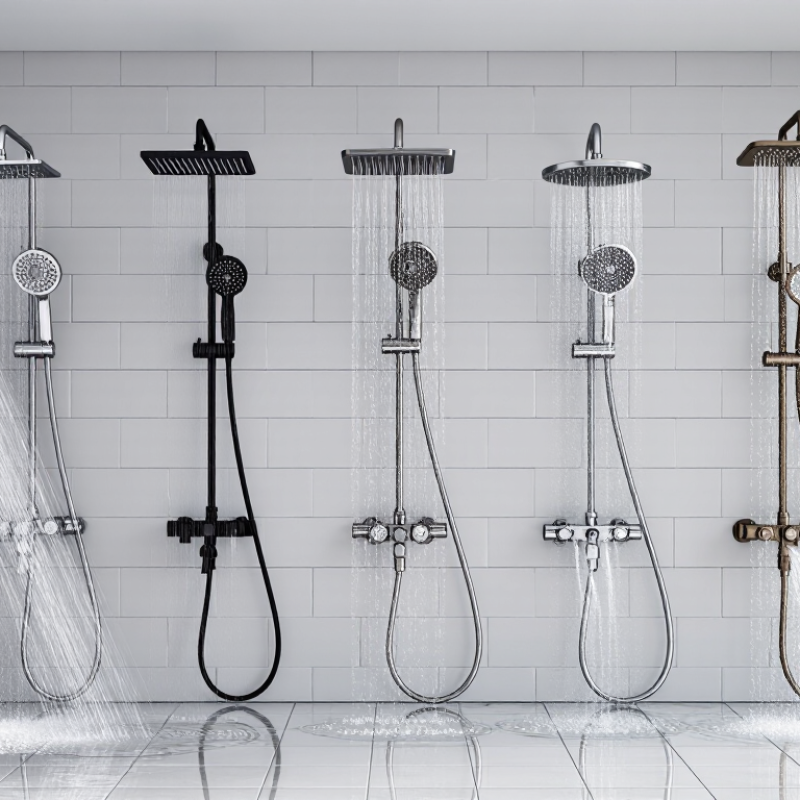
What Defines a High-Quality Head Shower for Global Buyers
What Defines a High-Quality Head Shower for Global Buyers
A high-quality head shower begins with controlled performance, not appearance. The U.S. Environmental Protection Agency’s WaterSense specification limits efficient showerheads to 2.0 gallons per minute, compared with the 2.5-gallon federal standard. This difference can reduce water use without making the spray feel weak. However, pressure depends on household plumbing, elevation, and local supply conditions. A model that performs well in one bathroom may disappoint elsewhere.
Tips: Check the flow rate, spray coverage, connection size, and cleaning method. Look for compliance with recognized safety and performance standards, such as ASME A112.18.1. Also inspect the nozzle material. Flexible silicone nozzles usually remove mineral deposits more easily. Test evidence matters more than glossy product photos.
Global buyers should also consider water reliability. The WHO and UNICEF Joint Monitoring Programme reported that 2.2 billion people lacked safely managed drinking water services in 2022. Shower design cannot solve infrastructure gaps, but efficient products can reduce household demand. Durable metal construction, corrosion resistance, and replaceable seals support longer service life across different climates. Yet no checklist is perfect. A heavier showerhead is not automatically stronger, and a larger spray plate may require more water. Buyers should compare independent test results, warranty terms, installation requirements, and regional spare-part access before choosing among the top options.
Top 10 Best Head Showers for Global Buyers? - What Defines a High-Quality Head Shower for Global Buyers
| Rank | Recommended Head Shower Type | Best Use | Typical Spray Diameter | Typical Flow Rate | Connection Standard | Common Materials | Key Quality Features | Global Buyer Suitability |
|---|---|---|---|---|---|---|---|---|
| 1 | Large Round Rain Shower | Relaxing, full-body rainfall coverage | 200–300 mm | 6–9 L/min | G1/2; 20.955 mm nominal pipe thread | Stainless steel or engineered polymer | Easy-clean nozzles, corrosion-resistant finish, balanced spray distribution | Suitable for most residential bathrooms with adequate water pressure |
| 2 | Square Ultra-Thin Rain Shower | Modern bathrooms and concealed installations | 200–300 mm | 6–9 L/min | G1/2 or NPT 1/2 adapter required by market | 304 stainless steel or ABS polymer | Low-profile body, anti-clog silicone jets, rigid mounting plate | Good international option when thread compatibility is confirmed |
| 3 | Adjustable Multi-Spray Shower Head | Families and users with different spray preferences | 100–150 mm | 6–9 L/min, depending on setting | G1/2 hand-shower connection | ABS polymer with stainless-steel or brass fittings | Three or more spray modes, positive selector control, easy-clean jets | Versatile for apartments, hotels, and mixed household requirements |
| 4 | Water-Saving Air-Infusion Shower | Reduced water consumption without a weak-feeling spray | 100–250 mm | 4.5–7.5 L/min | G1/2; verify local conservation requirements | ABS polymer or stainless steel | Air-mixing channel, flow regulator, stable spray at moderate pressure | Well suited to water-stressed regions and eco-conscious projects |
| 5 | High-Pressure Compact Shower Head | Low-pressure residential water systems | 80–120 mm | 5–8 L/min | G1/2 or NPT 1/2 with suitable adapter | ABS polymer, stainless steel, or brass inlet | Narrower spray channels, pressure-stable nozzles, removable flow restrictor | Practical for upper floors, small pumps, and areas with inconsistent pressure |
| 6 | Handheld Shower with Rail Set | Accessible bathrooms and flexible daily use | 90–120 mm handset | 6–9 L/min | G1/2 hose connection; adjustable rail mounting | ABS handset, stainless-steel rail, brass or polymer hose fittings | Height-adjustable holder, kink-resistant hose, easy-grip handle | Useful for children, older users, and universal bathroom layouts |
| 7 | Dual Shower Head System | Combined overhead and handheld showering | 200–250 mm overhead head plus 90–120 mm handset | Up to 9 L/min combined, depending on diverter setting | G1/2 supply and hose connections | Stainless steel, brass, and ABS polymer components | Reliable diverter, secure wall bracket, independent flow control | Best where installation space and water pressure are sufficient |
| 8 | Thermostatic Shower System | Precise temperature control and family safety | 200–250 mm overhead head | 6–9 L/min per active outlet | G1/2 or G3/4 depending on the valve system | Brass valve body, stainless steel head, polymer safety components | Temperature limiter, anti-scald protection, stable cartridge performance | Strong choice for hotels, family homes, and premium renovations |
| 9 | Ceiling-Mounted Rain Shower | Minimalist bathrooms and uniform vertical rainfall | 250–400 mm | 6–9 L/min | G1/2 or G3/4 concealed ceiling connection | Stainless steel or brass with corrosion-resistant coating | Rigid ceiling arm, flat spray plate, accessible service connection | Recommended for new construction or major bathroom remodeling |
| 10 | Filter-Compatible Shower Head | Areas with hard water, sediment, or chlorine concerns | 100–150 mm | 5–8 L/min | G1/2 inline filter or integrated cartridge connection | ABS polymer, stainless steel, and replaceable filter housing | Accessible filter replacement, sealed housing, visible maintenance interval | Useful where water quality varies and replacement cartridges are locally available |
Specification ranges are typical market benchmarks. Actual performance depends on inlet pressure, plumbing design, flow restrictors, local regulations, and thread compatibility.
Related Posts
-
2026 Top Head Shower Brands for Global Buyers?
-

China Best Over Head Shower Manufacturers for Global Buyers?
-
2026 Best Over Head Shower for Global Buyers?
-
How to Choose the Best Rainfall Shower Heads?
-

How to Choose the Best Large Shower Head for Your Bathroom?
-
2026 Best Large Shower Head Options for Ultimate Relaxation?